
By Anita Rajan, General Director, JAMA USA
Today, Japan Automobile Manufacturers Association (JAMA) USA released two reports that concurrently reflect the ongoing, substantial impacts of our members’ U.S. investments on the U.S. economy, society and automotive industry. There is a lot to get through as we explore our newest report and the updated study, so let’s dive in!
Beginning with the opening of the first research and development (R&D) facility in 1975 and the first vehicle manufacturing plant in 1982, Japanese-brand automakers have demonstrated a commitment to intentional growth in the United States. Over more than four decades, that commitment has helped establish a footprint of 26 manufacturing facilities, 41 R&D centers, and 65 distribution centers spanning 27 states. By the end of 2025, cumulative U.S. manufacturing investment and R&D investment reached all-time highs of over $70 billion and $4.7 billion, respectively.
Supported by trade agreements and policies such as the U.S.-Mexico-Canada Agreement (USCMA), this investment has continued to accelerate. In the last 10 years alone, Japanese-brand automakers have invested over $25 billion in new U.S. manufacturing, and today roughly 50 percent of what JAMA members sell in the U.S. is made in the U.S., with another 25 percent made in Canada or Mexico.

This level of investment means jobs. A lot of jobs. In fact, Dr. Thomas J. Prusa, author of an updated employment study titled, “The Impact of Japanese-brand Automakers on U.S. Employment”, notes that in 2025 our members and their dealership networks supported over 2.3 million U.S. jobs through direct, indirect and spin-off employment. Across the U.S., in communities like Marysville, Ohio; Smyrna, Tennessee; Georgetown, Kentucky; Lafayette, Indiana; and Huntsville, Alabama, these jobs have created economic opportunities for families and helped local communities thrive.
Japanese-brand automakers lead significantly in driving U.S. employment growth through direct manufacturing, which has grown by 34% from 2012 through 2025. In contrast, overall U.S. manufacturing employment has increased by only about 5.4% over the same period.
However, this level of investment does not happen in a vacuum. The United States remains an attractive location for investment given its deep automotive supply chain, substantial manufacturing infrastructure, strong education system, well-developed multimodal transportation systems, (relatively) stable legal and regulatory systems, and liquid capital markets. Still, challenges remain. This includes evolving trade policies, rapid technological change, and skilled workforce shortages, among others.

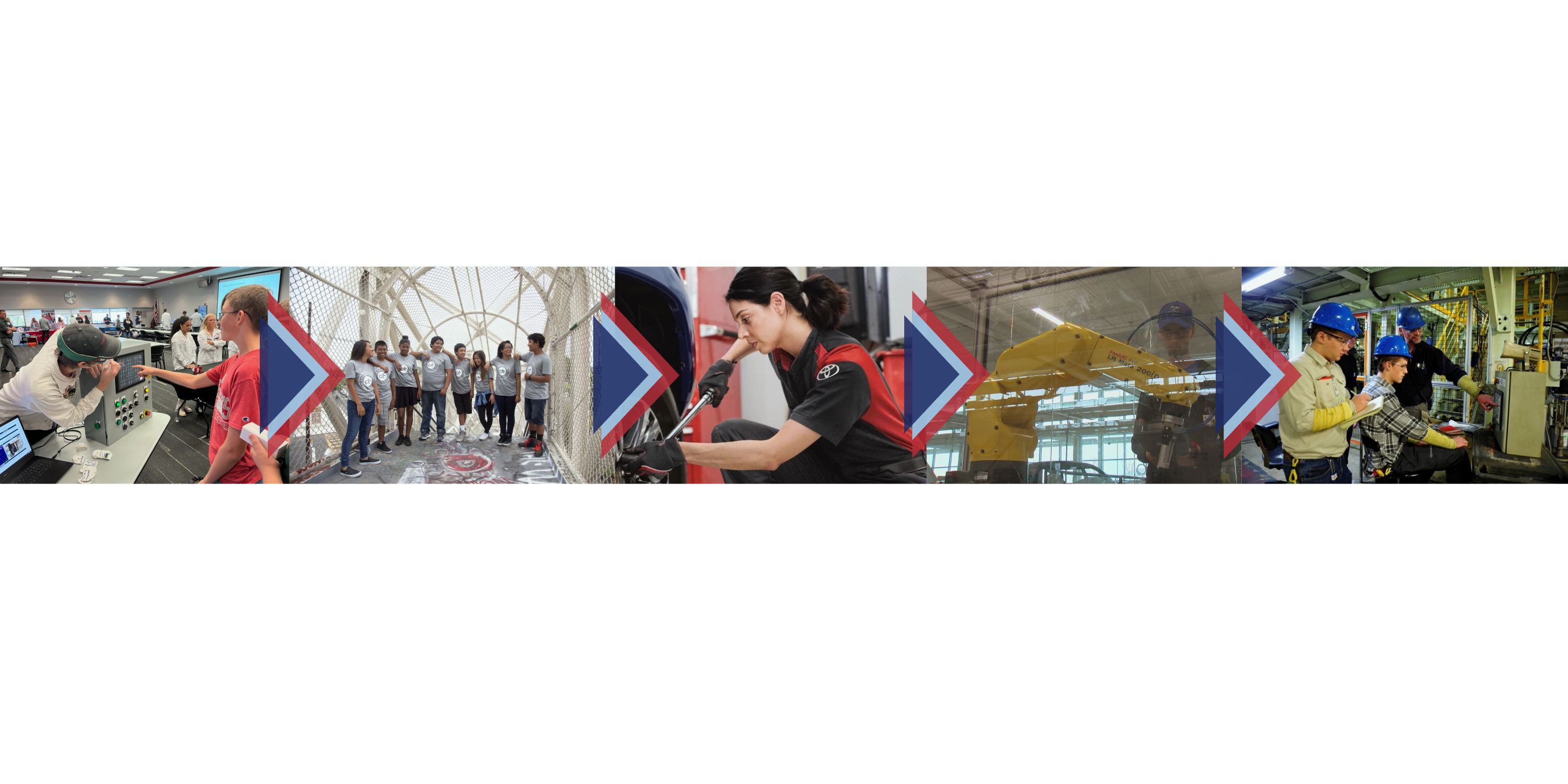
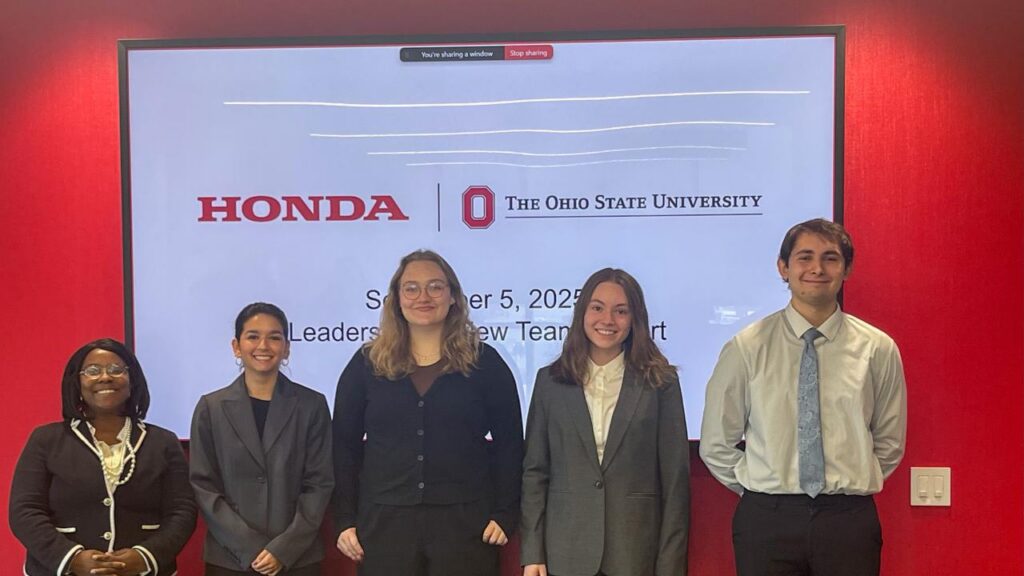
Accordingly, JAMA members continue to nurture investment growth through workforce development initiatives, charitable contributions, and a strong focus on American consumers. JAMA members’ U.S. subsidiaries are leaders in employer engagement, which helps develop the U.S. automotive workforce pipeline. Honda’s partnership with Ohio State University as well as Toyota’s Driving Possibilities program, and many Japanese-brand automakers’ participation in the Federation For Advanced Manufacturing Education (FAME) program are just some of the innumerable ways these automakers are investing in people and helping to create pathways towards future opportunities.
Japanese-brand automakers also have a well-known history of engaging with and supporting non-profits and community organizations. Our members’ charitable contributions to organizations across the U.S. reached over $220 million in 2025, bringing the cumulative total to over $2 billion since 1957. Some examples include Subaru’s long-standing work with the National Parks Foundation, where they are the largest corporate partner, and the American Society for the Prevention of Cruelty to Animals (ASPCA), where they are the largest corporate donor, and Mazda’s 20-plus-year partnership with the Second Harvest Food Bank of Orange County (California). Additionally, Mitsubishi Motors continues its multiyear Community Utility Vehicle (CUV) Program, which offers vehicle loans to nonprofit organizations making a difference in their local communities. These examples are just a snapshot of what is supported year in and year out through Japanese-brand automakers’ thoughtful efforts.
Last but certainly not least, success in the U.S. automotive industry also requires having a true understanding of American consumers. With nearly 50 years of R&D experience in the U.S. and well over 60 years of operating in the U.S. market, JAMA members are uniquely attuned to consumers’ needs. Now, perhaps more than ever, offering a range of affordable vehicle options is both necessary and highly valued. Japanese-brand automakers continue to deliver these options providing consumers with a wide variety of choices.
As we celebrate an excellent 2025 and JAMA members’ enduring progress in the U.S., JAMA USA’s Washington, D.C. office is also marking a milestone of its own- a 50-year anniversary. Commemorating 50 years at the same time the United States is celebrating its 250th anniversary is something extra special. It’s a testament to longevity, partnership, and impact. What better way to celebrate than by honoring and recognizing the legacy and importance of our members’ U.S. investments as we look ahead to the next half century!